
Your dog ran off. Start here.
Take one breath. Most dogs are found close to home, by people who live nearby, in the first few hours. Do these three things now — the rest of this page is the plan for the day ahead.
- 1Stop and look before you drive off
Dogs that have just bolted are usually still close. Scan under parked cars, along fence lines and behind the nearest bushes before you get in the car.
- 2Call their name calmly, then stay quiet
A panicked shout sounds like trouble and can push a frightened dog further away. Say their name in your normal voice, then stand still and listen for a few seconds.
- 3Put their bed and water outside your door
Their own bedding, or a t-shirt you have been wearing, carries the smell of home. Leave it by the door with a bowl of water so they have a reason to come back and a reason to stay.
Search small before you search wide
Four things to do on foot, in this order, before you start driving around.
- 1
Walk the block
Cover your own street and the nearest yards, alleys and green space slowly. Look under decks and cars and into anywhere a scared dog could wedge itself, and stop every so often to listen.
- 2
Leave the smell of home
Their bed, blanket or a worn piece of your clothing by the front door, plus a bowl of water. If your dog circles back while you are out searching, that is what holds them there.
- 3
Knock, don't just post
Ask your neighbors face to face to open their garage, shed and back gate and take a look. Dogs get shut in without anyone noticing, and a door someone opens tonight beats a post they read tomorrow.
- 4
Post one clear photo
Share a recent, well-lit photo in your local lost-pet groups and neighborhood apps, with the cross streets where your dog was last seen, the time, and the number you are answering right now.
Make it easy for a stranger to reach you
Once the first sweep is done, the job changes: put your details everywhere a finder might look.
File reports in person
Call every shelter and animal control office near you, file a lost report, then go in and look at the kennels yourself if you can. Ask how long they hold a stray and keep checking back — descriptions get logged differently than you would write them.
Check your microchip registry
A chip is only as good as the phone number attached to it. Log in to your registry, confirm the number and email are current, and mark your dog as missing there if the registry offers it.
Check what the tag actually says
If your dog wears a scannable tag, make sure it points to the phone you are holding right now — not an old number or a work line nobody is watching tonight. Update it before the next scan happens, not after.
Tell the people already out there
Mail carriers, delivery drivers, dog walkers and anyone who runs early covers more ground than you can. Give them the photo and your number and ask them to call the moment they see anything.
If it is someone else’s pet you have found, the finder’s side of this is on our Lost & Found page.
Your neighbors matter more than the shelter
Two figures worth knowing while you decide where to spend the next few hours.
“Between 11% and 16% of dogs go missing over a five-year period.”
Source: ASPCA
“Only 6% of dog owners found their lost pet at a shelter.”
Source: ASPCA
Keep filing the shelter reports — they are how you catch the case where someone hands your dog in. But the shelter is not where most of those owners found their dog. The door you knock on tonight, the photo in your neighborhood group and a way for a stranger to call you on the spot are doing the heavier work.
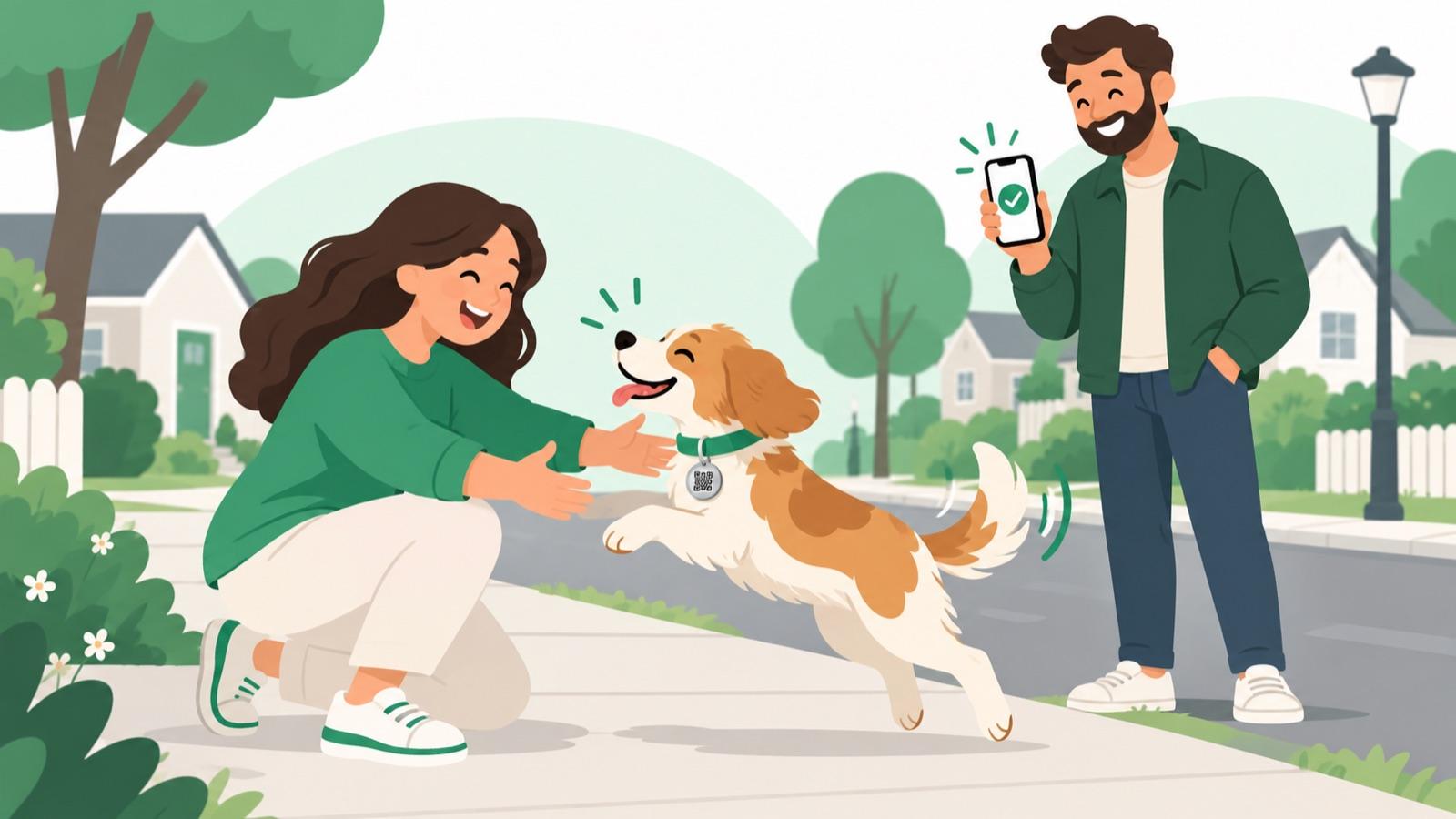
A scannable tag turns a stranger into a phone call
The person who picks your dog up is almost never a vet. It is a neighbor two streets over holding a dog with no way to say where it lives. A microchip cannot help them — a QR tag can, because the camera already in their hand opens your pet’s page.
- ✓Any phone camera opens the tag — no app for you or the finder
- ✓You choose which contact details a finder sees
- ✓Change the phone number yourself, any time, with no fee
- ✓Mark your pet lost and the tag page shows the alert on the next scan
Lost dog FAQ
What should I do in the first hour if my dog runs away?+
Search the immediate area on foot first and call their name in a calm, normal voice. Leave their bed or a worn piece of your clothing outside your door with water. Then knock on your neighbors' doors and ask them to check garages, sheds and back yards, and post a clear recent photo to your local lost-pet groups and neighborhood apps.
How far do lost dogs usually go?+
Most dogs do not go far at first, especially if they are frightened rather than chasing something. That is why the first sweep matters most: walk your own block and the nearest yards, alleys and green space carefully before you widen the search.
Should I chase my dog if I spot them?+
No. Running at a scared dog usually makes them run too. Crouch down, turn slightly sideways, avoid staring straight at them and call softly or use a familiar word like dinner. Let them come to you, and have a leash ready but out of sight.
Do I need to visit the shelter, or is a phone call enough?+
File a lost report with every shelter and animal control office in your area, and go in person if you can. Staff are matching your description against a kennel full of dogs, and your own eyes are better at recognizing your dog than a written description is. Keep going back while your dog is missing.
My dog is microchipped — is that enough?+
A microchip only helps once someone takes your dog to a vet, shelter or animal control office with a scanner, and only if your registry details are current. A scannable QR tag works the moment a neighbor picks your dog up, because any phone camera can read it. See our honest comparison of QR tags and microchips for how the two work together.
Give your dog a way to tell someone where they live
Tags start at $2.99, activate in minutes, and there are no monthly fees. Kingston’s Pet has been serving pet families since 2021.