
QR pet tag vs microchip
Both help a lost pet get home — but only one works the moment a neighbour finds them. Here’s the honest comparison.
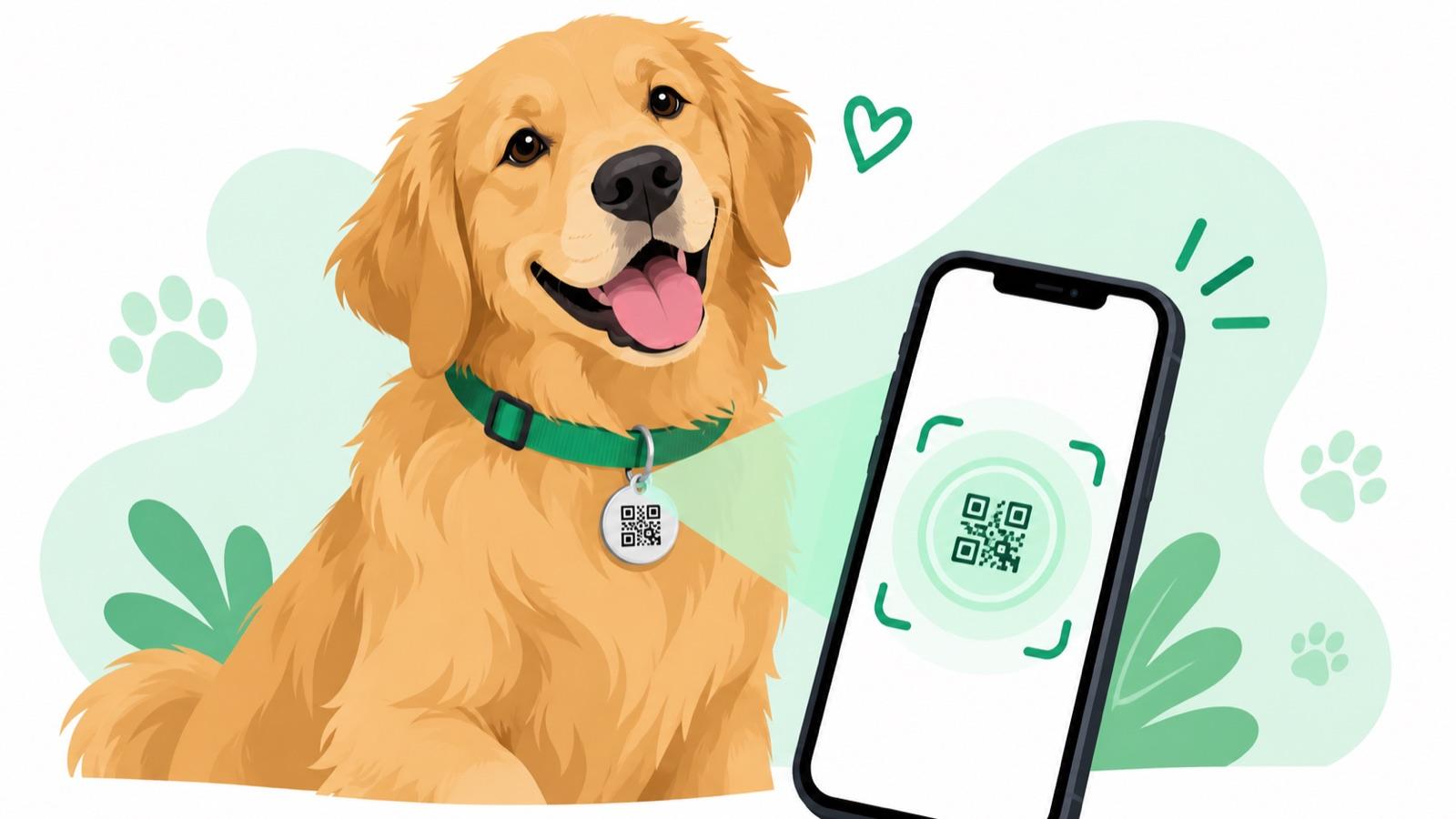
What each one actually does
Same goal, two very different paths. The difference is who has to be involved before you get a call.
| Kingston’s QR tag | Microchip | |
|---|---|---|
| Who can read it | Anyone with a smartphone camera | Only a vet or shelter with a scanner |
| How fast | Instant — on the spot | After the pet is taken to a vet/shelter |
| Shows your contact | Yes, right away | No — the finder can't see it |
| Update your details | Yourself, anytime online | Contact the chip registry, often a fee |
| Needs a procedure | No — clips to the collar | Yes — implanted by a vet |
| Works if the pet is taken home by a neighbour | Yes | Usually not |
| Ongoing fees | None | Some registries charge to update |
| Can be lost | Yes, if the collar comes off | No — it stays under the skin |
Why a finder can't read a microchip
A microchip isn't a tracker and isn't a tag. It's a passive chip that stays silent until a specific piece of hardware wakes it up.
No battery, no screen
A microchip carries no power source and nothing to display. It can't ring your phone, send an alert or show a finder who to call. Between readings it sits under the skin, completely dormant.
It only answers an RFID scanner
A handheld scanner has to be held against the pet. The scanner's radio field powers the chip for a moment, and the chip answers with its registry code — which then has to be looked up in a database.
Those scanners live at vets and shelters
Almost nobody owns one. So the chip only enters the story after your pet has already been picked up and driven somewhere official — a step that depends entirely on a stranger deciding to make the trip.
None of this makes a microchip a bad idea. It makes it a backup rather than a first response — the safety net that matters once every faster route has already failed.
Most lost pets are found by ordinary people
Not by a vet. And an ordinary person has a phone in their pocket, not a microchip scanner.
Only 6% of dog owners found their lost pet at a shelter.
Source: ASPCA
Every other reunion happened somewhere outside the system a microchip depends on — on a sidewalk, at a front door, in a neighbour’s backyard. Those are all places where a phone camera works and a scanner doesn’t exist.
- ✓A neighbour scans the tag and calls you within minutes
- ✓No trip to a vet or shelter needed
- ✓You control exactly what contact details are shown
- ✓You update your own details online — instantly, no fee
- ✓Weatherproof, no batteries, nothing to charge
Use both — they cover different failures
We sell QR tags, so take this for what it's worth: a tag alone leaves a gap, and so does a chip alone. Together they cover each other.
Permanent backup
It can’t fall off, snag on a fence or be removed by someone who doesn’t want the pet traced. If the collar is gone by the time your pet reaches a shelter, the chip is the only thing left that ties them to you — as long as your details in the registry are current.
The fast everyday path home
It works for the person standing in front of your pet right now, with nothing but the phone already in their hand. No app, no scanner, no monthly fee, and you can change your own contact details online the moment they change.
Chip your pet at the vet, keep the registry details up to date, and put a QR tag on the collar for the case that actually happens most. Comparing GPS trackers too? Read QR tag vs GPS tracker.
QR tags & microchips FAQ
Is a QR tag better than a microchip?+
They solve different problems. A QR tag is the fastest way for an ordinary person who finds your pet to reach you — no scanner, no vet visit. A microchip is permanent backup if the collar ever comes off. Most owners use both.
Do I need an app to scan a QR pet tag?+
No. Any phone camera opens the tag's page. There's nothing for you or the finder to install, and no subscription.
Can I change my phone number on the tag?+
Yes — log in to your Kingston's account and update your pet's details any time. The change is live instantly, with no fee.
What if my pet loses the collar?+
That's exactly why a microchip is good backup. The tag gets your pet home fast in the common case; the chip covers the rarer one.
Is my address shown to strangers?+
Only what you choose. You decide whether your phone and email are visible, and a finder can always message you without seeing your details.
Put a scannable tag on the collar tonight
Register the tag, add your pet's details, and any phone that points at it reaches you. No app for the finder, no monthly fees for you.
Tags from $2.99. Serving pet families since 2021, from Raleigh, NC.