
What to put on a dog tag
A tag has room for about three lines, and most owners spend them on the wrong things. Here’s what earns a line, what doesn’t, and the one debate that genuinely has two sides.
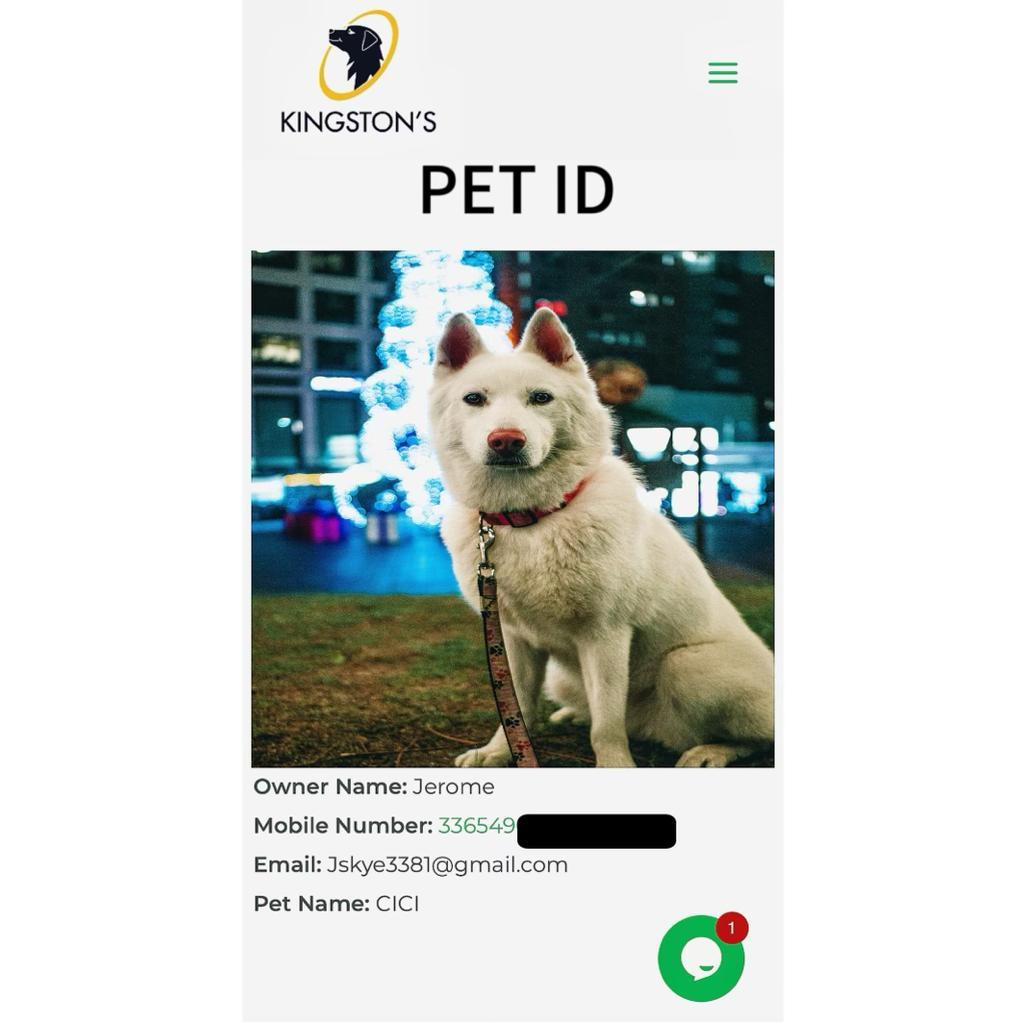
A number that rings, a backup, and anything urgent
If you only read one section, read this one. Everything after it is detail.
A phone number you answer
The cell you carry, not a landline at home or a work line that rolls to voicemail after five. A found dog is a 20-minute problem — the number has to ring in your pocket.
A second contact
A partner, a parent, a neighbor with a spare key. If your phone is dead or you're on a plane, the finder still has somewhere to go instead of the shelter.
Anything urgent
MICROCHIPPED tells a shelter to scan. NEEDS DAILY MEDS tells whoever has your dog tonight that this cannot wait until morning.
Notice what isn’t on that list: your address, and — arguably — your dog’s name.
What actually earns space on the tag
- ✓Your cell number, written out in full with the area code — a finder from two towns over can't guess it
- ✓A second number belonging to someone else, labeled so it's clear it's a backup
- ✓MICROCHIPPED, if they are — it's the prompt that makes a shelter reach for the scanner
- ✓An urgent medical need in plain words: NEEDS DAILY MEDS, DIABETIC, NOT FRIENDLY WITH DOGS
- ✓A city or ZIP if there's room left over, so a shelter knows how far your dog traveled
Order matters more than people expect. A finder reads the first line and stops. Put the number there — not a greeting, not “My name is,” not the word REWARD.
- 1Your cell number
Full ten digits. Nothing shares this line.
- 2A second number
Prefixed so it reads as an alternative, not a repeat.
- 3MICROCHIPPED, or the medical note
Whichever of the two is true. If both are, the medical note wins — it’s the one with a deadline.
Your dog’s name isn’t in this list on purpose. That one’s a judgement call — see below.
What to leave off — and why the name is debated
Two lines that look obvious and aren't. We'll give you the arguments rather than a verdict.
Your home address
The instinct is that it helps someone walk your dog home. In practice it tells a stranger holding your dog where you live — and, if your dog is out alone, that you may not be there. It also ages badly: the day you move, that line is wrong and the tag has to be replaced.
If you want the geography on there, a city and ZIP does the job without the street.
Your dog’s name
A frightened dog who hears their own name is easier to approach, calm and catch. A name also signals “this animal belongs to somebody,” which makes a finder more likely to make the call instead of walking on.
Anyone can read the name and use it — to call your dog over, or to sound like the owner in front of a third person. For a dog who will go to whoever says their name, that’s a real downside.
Most owners include it. If your dog is unusually trusting, or you’ve had reason to worry about theft, leaving it off costs you very little — the phone number is what does the work either way.
Engraved vs editable
The honest limitation of engraving isn't quality. It's that the information is fixed and your life isn't.
An engraved plate
Stamped metal, no account, no signal, no battery. Someone can read your number out loud in a parking lot and dial it. That dependability is genuinely hard to beat, and it’s the reason engraved tags have outlasted every gadget sold alongside them.
The limit: it’s fixed. Change carriers, move house, or board your dog with a sitter for two weeks and the engraving is now wrong — and the only fix is buying another tag.
Three lines is also the whole budget. And the lettering wears smooth over the years, rubbing against a buckle and whatever else hangs off the collar.
A scannable tag
The plate itself never changes — it just points at a page you own. Edit that page and it’s live immediately, on the same tag, on the same collar. Nothing to re-order and nothing to re-engrave.
- ✓Far more than three lines: vet name and number, a second contact, medical notes, a photo
- ✓Hand the sitter's number in for two weeks, then swap it back
- ✓You choose which details a finder can see, and which stay private
It does ask something of the finder: a phone with a camera and enough signal to open a page. Most people have both — but not everyone, everywhere.
There’s no need to pick a side. Plenty of owners run both on one collar: an engraved number for the person with no phone, and a scannable page for everything that changes.
Dog tag wording FAQ
What information should be on a dog tag?+
At minimum, a phone number you actually answer. If there's room, add a second contact number, the word MICROCHIPPED if your dog is chipped, and any urgent medical need such as NEEDS DAILY MEDS. Everything else is optional — the number is what gets your dog home.
Should I put my dog's name on their tag?+
There's no single right answer, and anyone who tells you otherwise is overselling it. The name helps a finder calm and catch a frightened dog, and it makes a stray look like somebody's pet rather than a stray. It also lets a stranger call your dog over by name, which matters more if your dog will go to anyone who says it. Decide based on your dog — and know the phone number does the real work either way.
Should I put my home address on a dog tag?+
We'd leave the street address off. It tells anyone holding your dog exactly where you live, and it's the line most likely to go stale when you move. A city and ZIP is usually enough context for a shelter, and a phone number is more useful than either.
Is it worth writing MICROCHIPPED on the tag?+
Yes, if your dog is chipped. A chip is invisible — nobody scans for one unless they have a reason to think it's there. The word on the tag is the reason. You don't need to engrave the chip number itself; the shelter's scanner reads it.
What happens when my phone number changes?+
On an engraved plate, nothing happens — which is the problem. The old number stays engraved until you order a replacement tag. On a scannable tag, you log in, change the number, and the next scan shows the new one. Same tag, same collar.
Are engraved tags still worth buying?+
Yes. An engraved number works with a dead phone, no signal and no account — someone can read it out loud and dial it. It's the most dependable three lines you can own. It just can't change, and the lettering wears down over years of knocking against a buckle. Plenty of owners run both on the same collar.
Write it once. Change it whenever.
Kingston’s smart tags start at $2.99, activate in minutes, and never charge a monthly fee. Update your number, your vet or your sitter’s details from your account — the next scan shows the new version.